

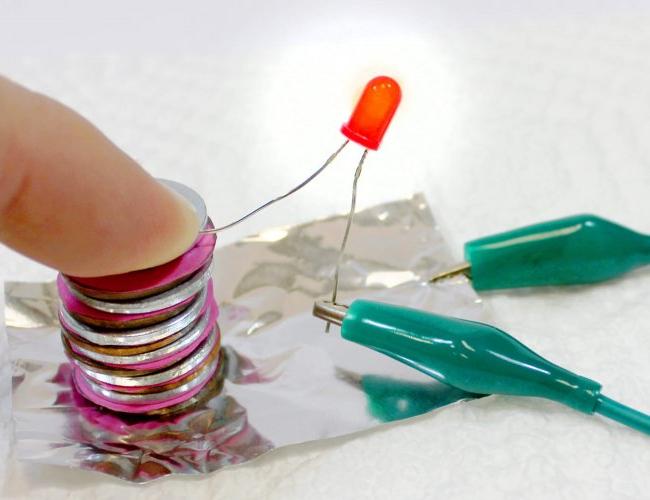
One of our regular STEM EDA professional development activities is the Explore Electricity flashlight build. This simple, fun activity requires very little set up and doesn’t make a large mess – always a plus for teachers! During the “Research the Problem” step of the Engineering Design Process, students are introduced to the flow of electrons within a battery and are then challenged to create a simple battery via a voltaic pile. Using that pile, students produce light through a small LED.
The supplies you need are an 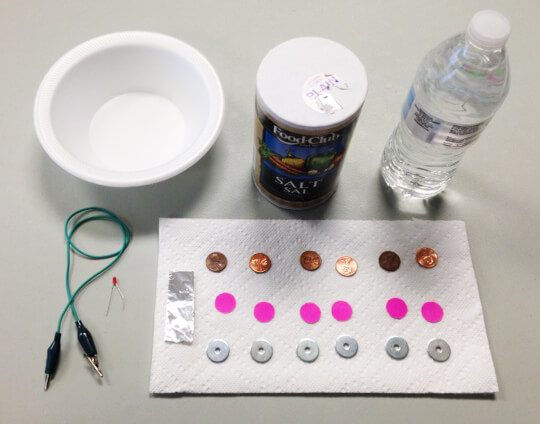
- approximately 6 pieces of copper*
- approximately 6 pieces zinc (preferably the same size/diameter as the copper pieces)
- cardstock/construction paper cut into roughly the same size as the metal
- small cup of salt water
- a small square of aluminum
- an alligator clip/wire
- a small LED bulb
*When looking for copper, don’t just assume pennies will work. Modern pennies are made primarily with zinc and a very thin layer of copper leaf. Pennies minted after 1982 have very little copper in them and will not facilitate motion of the electrons.
In a small bowl, soak the paper in the salt water. Once soaked, dab off any extra water.
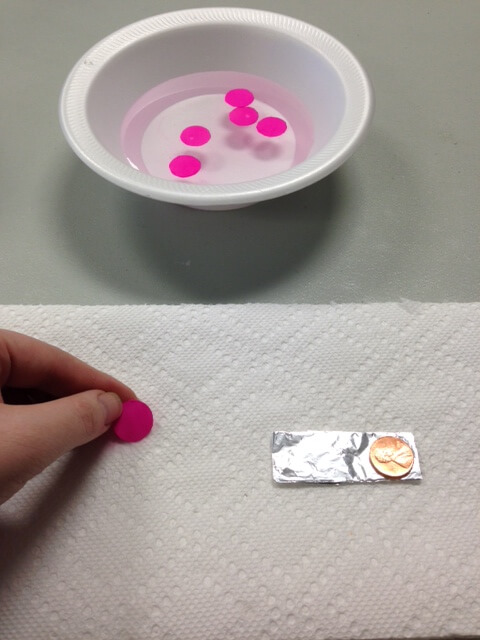
Step 1: Soak pieces of paper in salt water.
On your foil, build your first voltaic pile. Place a piece of copper, then a piece of paper, and finally your zinc on top. This completes your first voltaic pile.
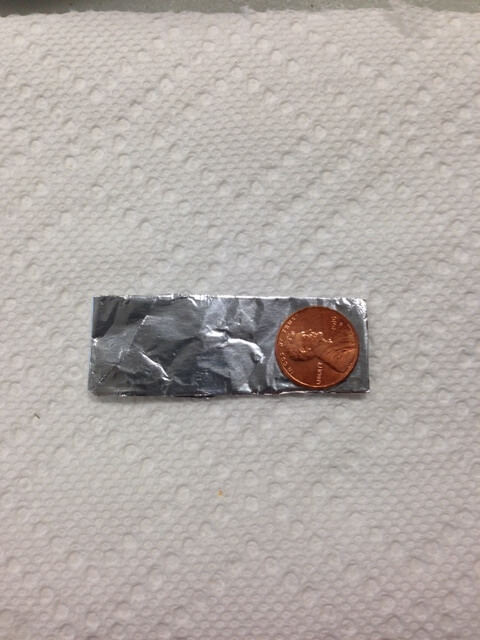
Step 2: Place copper on top of foil.
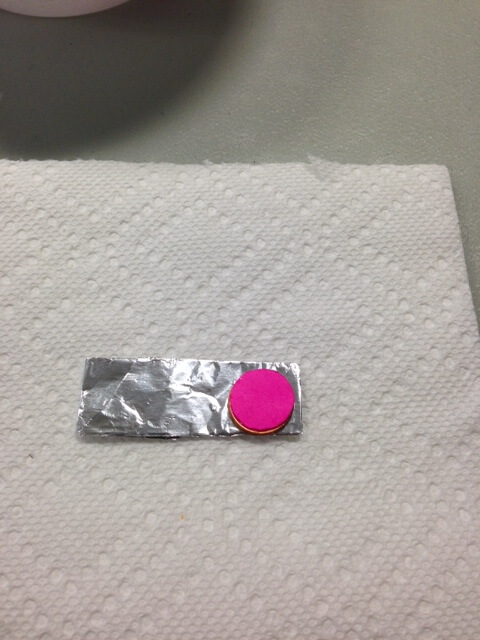
Step 2: Place piece of soaked paper on top of copper.

Step 2: Place zinc on top of paper.
Continue this process until you have used all of your copper and zinc pieces.
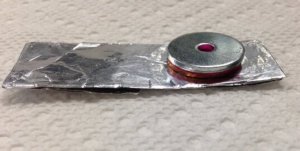
Step 3
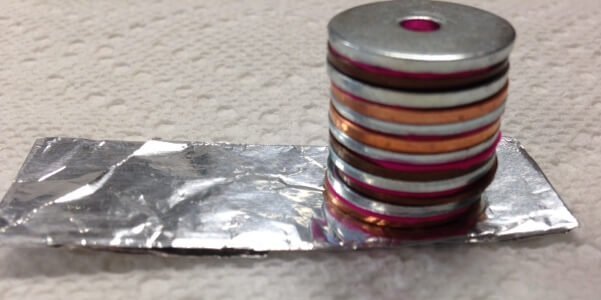
Step 3 continued
Stack your piles, making sure to place your piles with the copper of each pile sitting on the zinc of the one below it.
Clip the alligator clip to the foil and place the long leg of the LED in the other end of the clip.
Touch the short leg of your LED to the top piece of zinc and you should have light!
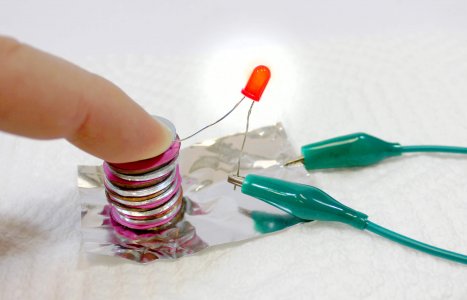
This activity illustrates electrons flow from 2 dissimilar metals through a salt bridge in order to light a bulb. The full module goes in-depth in explaining the way electrons move across the salt bridge. Request access to the STEM EDA Explore Electricity module here!